Edward Redding, Cookies, and a Life Well Lived
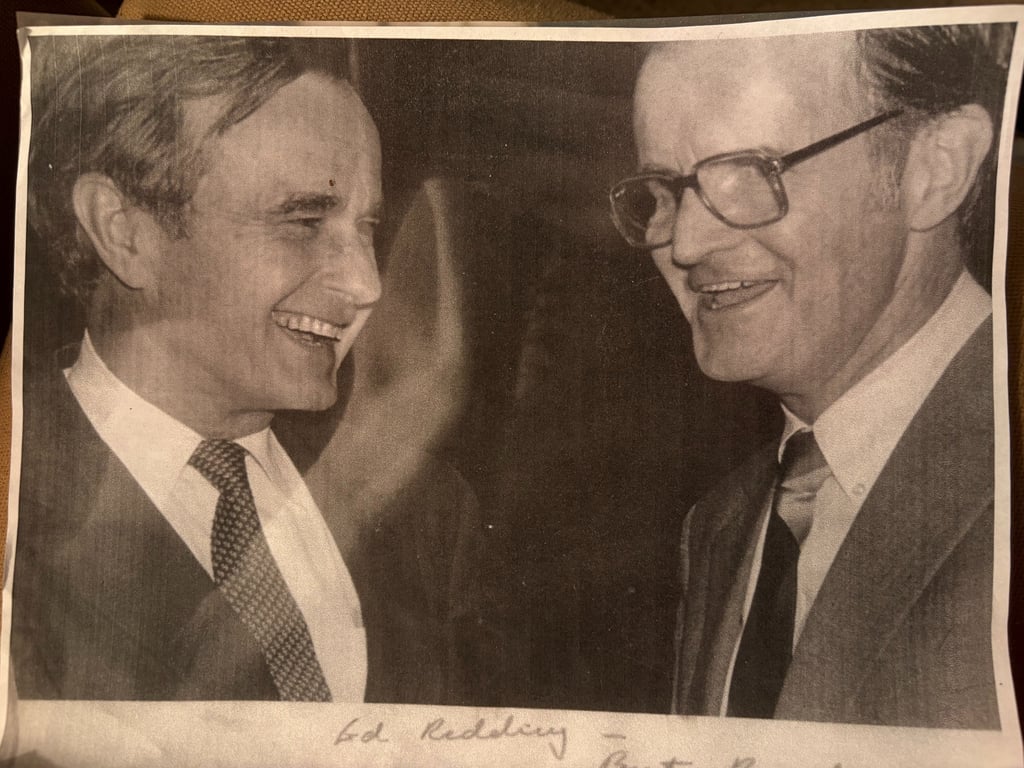
Edward Redding, 99, has lived more lives than most people can imagine, from the Great Depression to Nabisco boardrooms, from the Catskills to Calcutta.
5/25/2026
Brooklyn, 1926
Edward Redding's father died the day before his first birthday. His mother — an Irish immigrant with no family in America — was left alone to raise two boys in Brooklyn during the final years of the Great Depression. "That sets the tone for the poverty program," Edward says, with a laugh that makes it clear he has long since made peace with that beginning.
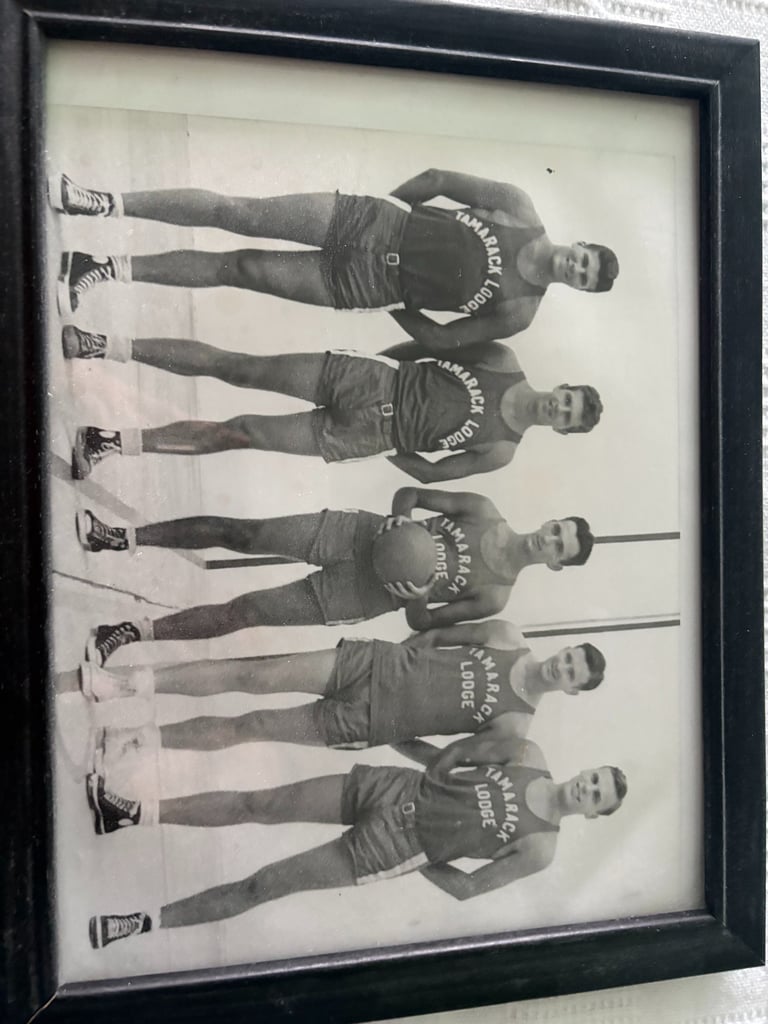
The YMCA became his second home.” Basketball was his escape. And a chance meeting on a New York City street corner, the day before he was to report for military service, changed the course of his life.
How to get into the Navy by talking to a stranger
Edward's older brother had written home from Europe, where he was fighting in the tank corps and had earned a battlefield promotion to captain: stay away from the army. On the day before Edward was to report for induction, at which time recruits were assigned to the Army, Navy, or Marines, he happened to meet a man on the street who worked in Navy recruitment in New York. “Edward said he wanted the Navy. The man told him what to say and when, had him step off to the side of the line, and watched the tables until it was time. “Go to desk four,” he said. Edward went. And so Edward Redding joined the Navy.
"Everything worked out beautifully. That's how I got into the Navy; just meeting this fellow on the street."
The Catskill Summers
Before the service and after it, Edward spent summers waiting tables at a Jewish resort in the Catskill Mountains as the only gentile on staff. The hotel's matriarch, whom everyone called Mama, took a particular liking to him. She would sneak him through the kitchen past her Orthodox rabbi husband, pushing glasses of milk on him with instructions not to tell anyone. All the waiters knew what was occurring. It led, Edward says, to a lot of fun and a lot of craziness.
One of his fellow waiters that summer was a lanky young man named Bob Cousy, who would go on to become one of the most influential players in NBA history. On one of their rare nights off, they took a car out into the Catskill Mountains without headlights- and drove off a cliff. A tree stopped them. No one was hurt badly. Throughout their time together, they got into a good deal of trouble together.
From filling shelves to Chips Ahoy
In the Navy, Edward tried out for the base basketball team at Sampson, New York, and made it. The team played colleges across the northeast and beat them all. At one game in Queens, the referee happened to be the same man who had run the program at Tamarack Lodge. He asked Edward what he planned to do after the service. Edward said maybe LIU. The man made a phone call to St. John's instead. Edward showed up in his uniform, joined a practice, and waited. They called him back and offered him a scholarship alongside his G.I. Bill. That was how Edward Redding got to St. John's.
After graduating, he joined Nabisco. His first job was loading cookies onto supermarket shelves in Queens. He did it for five years.
Then came a promotion into marketing, where he joined a small team developing a new product: a chocolate chip cookie they called Chips Ahoy. It became the second-best-selling cookie in the world.
Nabisco sent him to Harvard's Advanced Management Program, a class of about 75 senior executives, all men in those days, all from all over the country. That’s when things really got started,” Edward says. From that time on, his rise was steady and far-flung. He became chairman of Nabisco’s operations in England, running two companies. Then, Belgium, where he was put in charge of some 20 companies across Europe. And each time the family packed up and left. Children in tow, in boarding schools, settling in a new country, whether they liked it or not. His oldest daughter, a high school freshman with a quarterback boyfriend back on Long Island, wasn't too excited. Eventually, she came around. They all did. From Belgium, Nabisco brought Edward back to the United States as president of the International Division, a role that meant responsibility for 25 companies around the world and, as he puts it, constant travel to places he was supposed to know all about.
Seven years on the tour
Near the end of his career, Nabisco's new president handed Edward what TV broadcasters would later call the best job in American industry: traveling the professional golf and tennis circuits as the company's ambassador, hosting Nabisco's biggest clients at tournaments across the country and around the world. His wife came along. They flew first class. They stayed in the company apartment on a major golf course in California. This went on for seven years.
The golf connections eventually brought Edward a profile in the New York Post. St. John's University read it and offered him an honorary doctorate, presented at the June graduation, in the same arena where decades earlier a referee's phone call had first gotten him through the door.
A truckload of cookies for Mother Teresa
His Nabisco role also took Edward to Calcutta, where his wife arranged a visit to Mother Teresa's home. They sat and talked at length. Before they left, Mother Teresa asked what Edward might be able to do for her six food programs in upper Manhattan. He went back to Nabisco, quietly worked the right channels, and arranged the delivery of a full truckload of mixed cookies and crackers to her Bronx location.
"If cookies are what it's going to take, she'll get some cookies. And that's what it was."
What keeps a person going
In the coming week, he will be cutting a cake for his 100th birthday, and he resides in Sarasota. Most of his old buddies have passed on. However, his five kids, along with their families, are very dear to him, and he refers to them as his supervisors.
When people ask how he has lived so long, he gives a one-word answer: gratitude. Think about what you have, he says. Friends. Food. Everything going your way. Be thankful for it.